
As vehicle technology continues to evolve, insurers and repairers face increasing pressure to manage more complex repairs, rising costs and growing customer expectations.
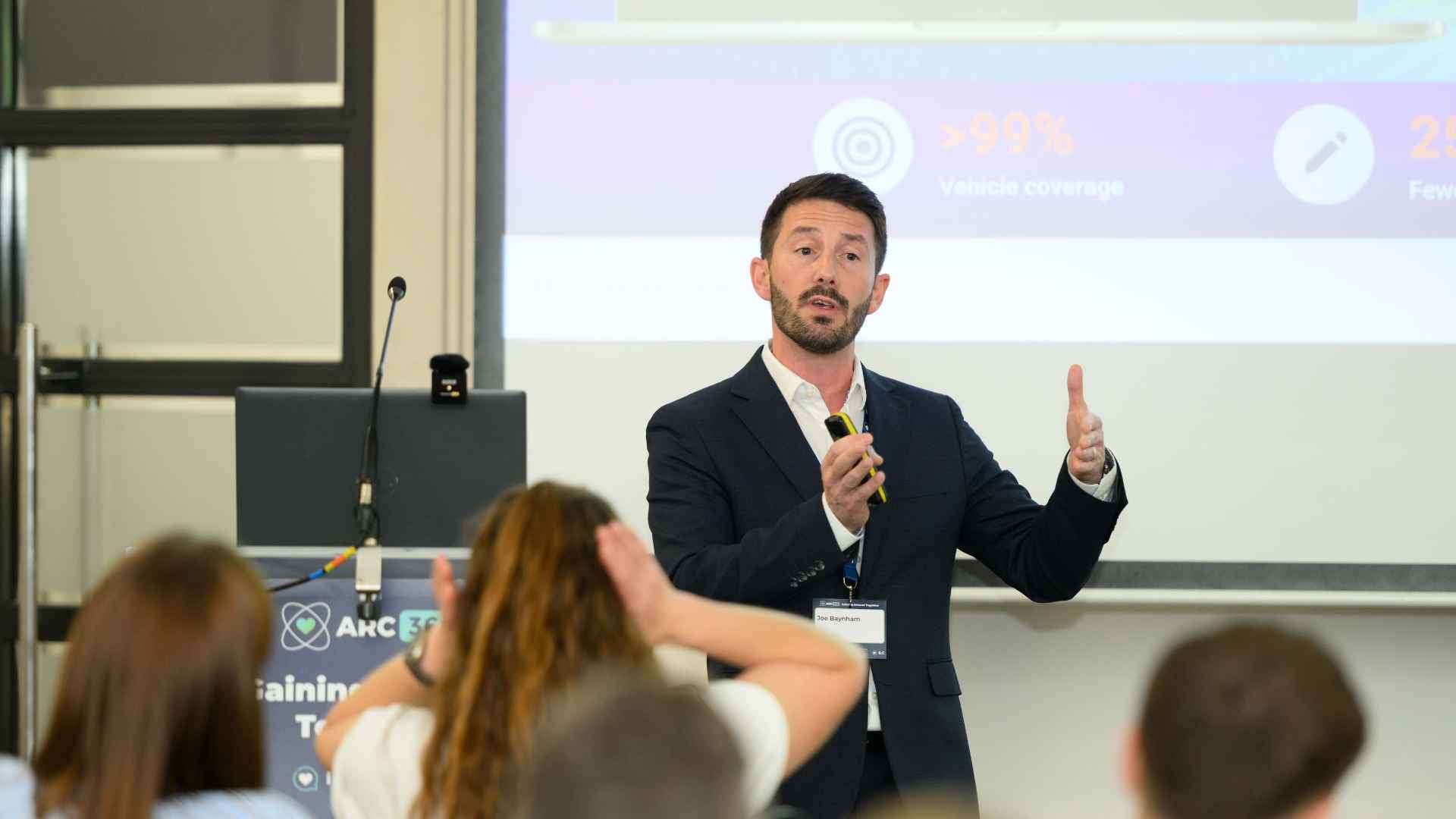
Speaking on the Showcase Stage at ILC’s repair sector event – ARC360 2026, Joe Baynham, Business Development Manager at Solera Audatex explored how artificial intelligence (AI) is beginning to play a larger role in addressing those challenges, helping organisations make faster decisions, improve consistency and create more efficient claims journeys.
The session focused on the growing complexity of vehicle repairs and why traditional estimating and claims processes may need to evolve to keep pace with changing market conditions.
According to the presentation, insurers and repairers are operating in an environment where several factors are contributing to increased claims costs and operational pressure. These include changing driving patterns, ongoing supply chain disruption, inflationary pressures, labour shortages and the growing complexity of modern vehicles.
Advanced Driver Assistance Systems (ADAS), electrification and increasingly sophisticated vehicle architectures are delivering important safety benefits, but they are also changing the nature of repair work.
Costs and customers
The presentation highlighted research showing that repair costs continue to rise as vehicles become more technologically advanced and require increasingly specialist repair methodologies.
At the same time, customer expectations are evolving.
Today’s policyholders increasingly expect digital interactions, rapid decision-making and greater transparency throughout the claims process. Insurers are seeking faster and more consistent assessments, while repairers are looking for ways to improve productivity and reduce unnecessary administration.
Against this backdrop, Joe explored the role AI could play in supporting the collision repair ecosystem.
The central argument was that AI has the potential to improve efficiency across the claims journey by helping organisations make better-informed decisions earlier in the process.
Decision making
The presentation noted that manual estimating processes can often be time-consuming and may introduce inconsistencies between different parties. AI offers the opportunity to standardise elements of the process while supporting faster decision-making.
One of the key themes was the importance of understanding repair requirements as early as possible.
AI-enabled estimating can help identify factors such as electric vehicle requirements, ADAS calibration needs and specialist material considerations before repairs begin. This information can then support more effective repair routing and resource allocation.
Joe outlined how getting vehicles to the right repairer at the right time has the potential to reduce delays, improve cycle times and enhance customer outcomes.
Intelligent estimating
Supporting this evolution is Solera’s Qapter Intelligent Estimating platform, which combines image analysis, machine learning and repair data to generate preliminary repair estimates from photographs.
The process begins with image categorisation, where photographs are assessed for quality and suitability before damage analysis takes place. Machine learning algorithms then identify damaged components, assess severity and calculate the likely repair requirements.
The system currently supports the identification of multiple damage types, including dents, scratches, cracks, missing parts and glass damage, before applying repair rules and vehicle-specific data to generate an estimate.
The process can create a preliminary estimate in under one minute, with some calculations completed in less than 30 seconds.
The objective, however, is not simply speed.
Standards
Joe highlighted how AI-enabled estimating can help standardise processes, reduce subjectivity and support more informed repair-versus-replace decisions. It can also reduce friction between different parties within the claims journey by providing a common starting point for assessment and review.
For repairers, the benefits extend beyond estimate creation.
Earlier visibility of vehicle requirements can help improve workflow planning, identify specialist repair needs and ensure vehicles are directed to appropriately equipped facilities. This becomes increasingly important as ADAS systems, electrification and alternative vehicle constructions become more prevalent throughout the vehicle parc.
Joe also outlined the value of Qapter’s guided image capture technology, which helps vehicle owners provide suitable images during the claims process. Using vehicle identification and image-capture guidance, the system aims to improve image quality and increase the accuracy of damage detection.
Efficiency
Throughout the session, a recurring theme was the growing need for efficiency. Insurers are seeking more predictable outcomes. Repairers are looking for greater productivity. Customers increasingly expect faster and more convenient service.
The session highlighted how AI could help address each of these priorities by reducing manual processes and enabling earlier intervention throughout the claims journey.
For insurers, repairers and technology providers alike, the focus is increasingly shifting towards how data, automation and AI can support better decisions and more efficient outcomes.
The session concluded with a simple message: as the industry evolves, estimating and claims processes need to evolve with it.
Supported by Corporate Partners Allscreens, BASF, e2e, Exclusive Repair Network, iBodyshop, Mirka, NWVA, Prasco UK, Repairify, S&G, Sherwin-Williams, Solera Audatex and Spire Drive, alongside sponsors Partly, Silverlake Automotive Recycling and Thatcham Research; as well as Industry Body Partners AutoRaise, MIB, NBRA and Trend Tracker; and Vehicle Manufacturer Partner Stellantis, ARC360 2026 attracted close to 400 key persons of influence from across the UK vehicle repair and motor claims sector.
Tweet
UPCOMING EVENT

MGA Claims Conference 2026
5 November 2026
Motor Repair News

ILC Motor Repair News – Friday 23 October 2026
23-10-2026
Rapid Repair Network joins ILC
23-10-2026
AION partners with CRG Diagnostics
21-10-2026
Insurer Partners








Industry Body Partners


Insights Partners


Motor Repair Corporate Partners





Motor Repair Industry Body Partners

Motor Repair Vehicle Manufacturer Partners
